


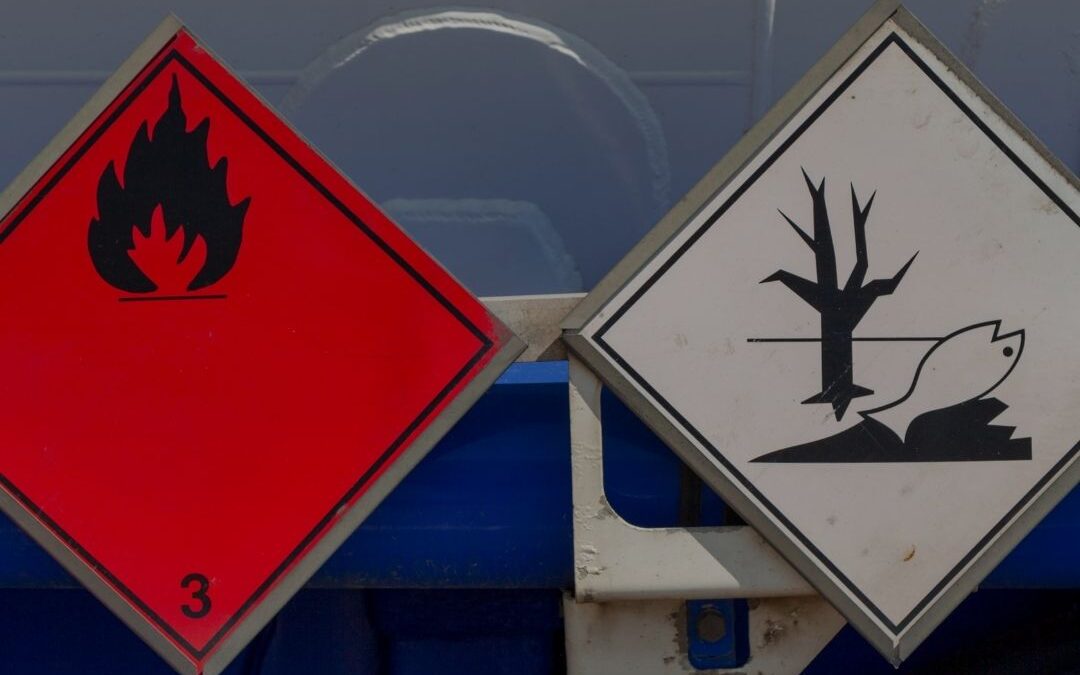
A new edition of the ADR, the international agreement governing the carriage of dangerous goods by road, is scheduled to come into force on 1 January 2027.
For companies handling chemicals, tankers and international transport, this is more than simply a new edition of the regulations. The amendments introduce technical changes in several areas, making it advisable to review in advance which provisions apply to each type of vehicle, goods and operation.
The timetable is also particularly relevant: the amendments were formally notified to the Contracting Parties on 1 July 2026, and the deadline for raising objections is 1 October. If no objections are submitted in accordance with the established procedure, the amendments will take effect on 1 January 2027.
What is changing under ADR 2027?
The revision of the ADR introduces amendments across various areas of dangerous goods transport.
These include new and revised provisions for certain lithium batteries, sodium-ion batteries and hybrid batteries, provisions relating to hydrogen transport, changes concerning certain packaging and new vehicle safety requirements.
Numerous technical amendments have also been introduced to the provisions governing packaging and tanks.
For this reason, referring to the “ADR 2027 changes” as though they affected all companies in the same way could lead to the wrong conclusion.
The same update does not affect every fleet in the same way
A company transporting dangerous goods in packages will not necessarily have the same obligations as a company specialising in the carriage of liquid chemicals in tankers.
To determine the actual impact of an amendment, several factors must be taken into account, including:
-
the goods being transported;
-
the relevant UN numbers;
-
the hazard classes;
-
the type of vehicle;
-
the specifications and approval of the tanks;
-
the applicable special provisions;
-
the documentation used;
-
inspections and checks;
-
and the domestic or international routes operated.
Reviewing ADR 2027 should therefore involve more than simply downloading the new edition and searching for the paragraphs that have changed.
Tanks require a specific review
For tank transport, the technical amendments deserve particular attention.
The ADR sets out specific requirements for the construction, equipment, use, inspection and marking of tanks intended for the carriage of certain dangerous goods.
Indeed, the working documents associated with the 2027 revision include amendments and transitional provisions specifically relating to certain fixed and demountable tanks.
It is therefore particularly important to check which requirements apply to each item of equipment and, above all, whether transitional provisions allow certain vehicles or equipment to remain in use for a specified period.
Not every amendment necessarily means that equipment must be replaced or a tank adapted immediately. Some changes specifically include transitional periods.
Knowing when an amendment comes into force is not always enough. Companies must also understand how it applies and how long certain existing arrangements may remain in place.
Should companies wait until 1 January?
No.
The planned entry into force in January 2027 does not mean that companies need to wait until then to start reviewing their operations.
On the contrary, the period beforehand provides an opportunity to identify relevant amendments, check which vehicles and operations are affected, and prepare any necessary changes in good time.
This is particularly important for international transport.
A company operating between Spain and France may need to coordinate the requirements applicable to the same operation at different stages of the logistics chain, while crossing several territories during a single journey.
In these circumstances, regulatory planning is an integral part of transport planning.
2027 is more than just a new edition of the ADR
ADR 2027 comes alongside other developments pointing towards the gradual transformation of road freight transport.
On the one hand, technical requirements are being updated to reflect new technologies and developments in vehicles and the goods being transported.
On the other, Europe is moving towards the digitalisation of regulatory information through the eFTI Regulation.
For transport companies, the challenge is not simply to know each new regulation.
It is to understand which aspects of each change genuinely affect their operations and how to put them into practice on a day-to-day basis.
At Fernández Aedo, we monitor developments in the regulations governing road freight transport, particularly operations involving chemicals and dangerous goods carried in tanks.
In a sector where regulations are constantly evolving, staying ahead of changes is also part of doing the job properly.
If you would like further information about dangerous goods transport or any of our services, please do not hesitate to contact us.