


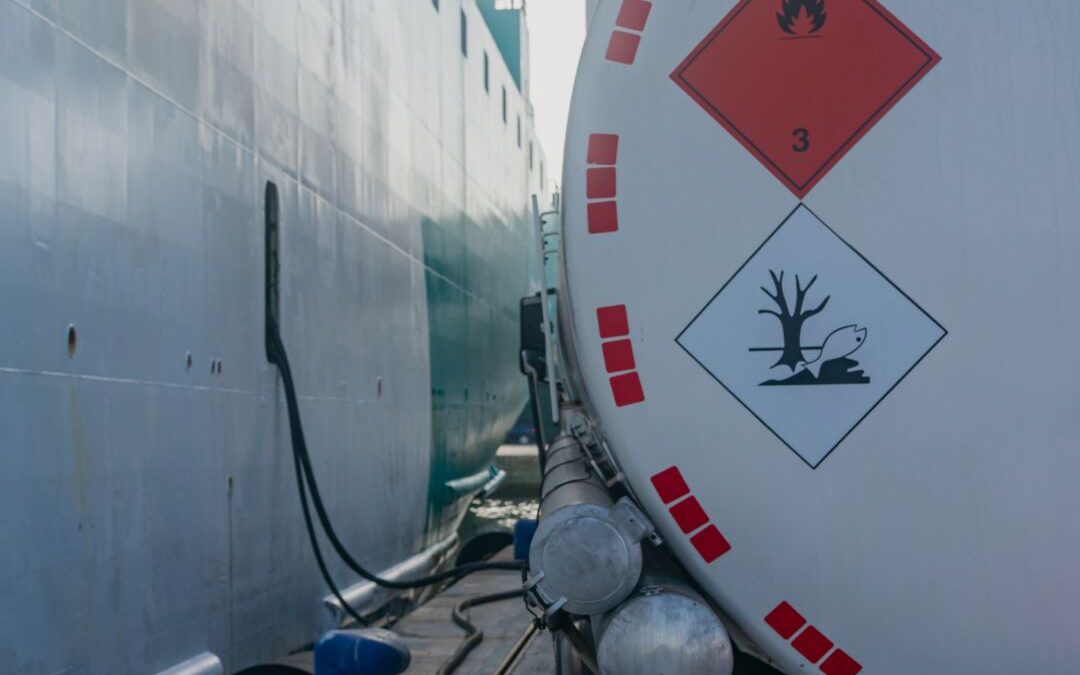
Density is one of the most important parameters in the transport of liquids by tanker, as it directly affects quantity control, product traceability and the correct execution of loading and unloading processes.
However, during the summer, high temperatures introduce a critical variable: thermal instability in the product.
This can lead to errors in density readings if the appropriate correction procedures are not applied.
What Is Density and Why Does It Change with Temperature?
Density is the relationship between the mass and volume of a liquid. When temperature increases:
- The volume of the liquid expands
- The mass remains constant
- The density decreases
This change is completely normal from a physical perspective, but it can cause confusion if measurements are not interpreted correctly.
Main Sources of Error in Summer
1. Measurements without temperature correction
One of the most common errors is recording density without adjusting for the product’s temperature.
2. Differences between loading and unloading temperatures
The product may undergo significant temperature changes between the point of origin and the destination due to thermal exposure during transport.
3. Instrumentation not calibrated for high temperatures
Equipment that is not suitable for extreme conditions may lose accuracy when exposed to high temperatures.
4. Readings taken under non-uniform conditions
Thermal stratification within the tanker can result in inconsistent readings.
Operational Consequences of Density Errors
• Inventory discrepancies
Small variations can lead to significant differences when dealing with large volumes.
• Invoicing errors
Density directly influences the calculation of the quantity of product transported.
• Problems in subsequent industrial processes
Incorrect density readings can affect mixtures or chemical reactions.
• Loss of traceability
Accuracy in monitoring the product throughout the logistics chain is reduced.
Factors That Make the Problem Worse in Summer
- Sustained high ambient temperatures
- Direct sunlight on the vehicle
- Prolonged stops with a full load
- Temperature differences between the tank and its surroundings
- Products that are particularly sensitive to temperature changes
Professional Correction Methods
✔ Standardised temperature correction
Applying specific tables or formulas according to the product being transported.
✔ Simultaneous measurement of temperature and density
This makes it possible to adjust the measured value to reflect the actual product conditions.
✔ Use of calibrated instrumentation
Equipment designed to operate under variable thermal conditions.
✔ Consistent procedures throughout the logistics chain
From loading through to unloading.
✔ Operational staff training
Essential for correctly interpreting the data obtained.
Good Practices in Daily Operations
- Avoid measurements during periods of sudden temperature change
- Always record temperature alongside density
- Check equipment before each operation
- Apply consistent correction criteria
- Document all relevant variations
The key is precision: measure accurately, apply the appropriate corrections and maintain consistent procedures throughout the transport chain.
If you would like more information about our dangerous goods transport services or any of the solutions we offer, please do not hesitate to contact us.